
This post may contain affiliate links.
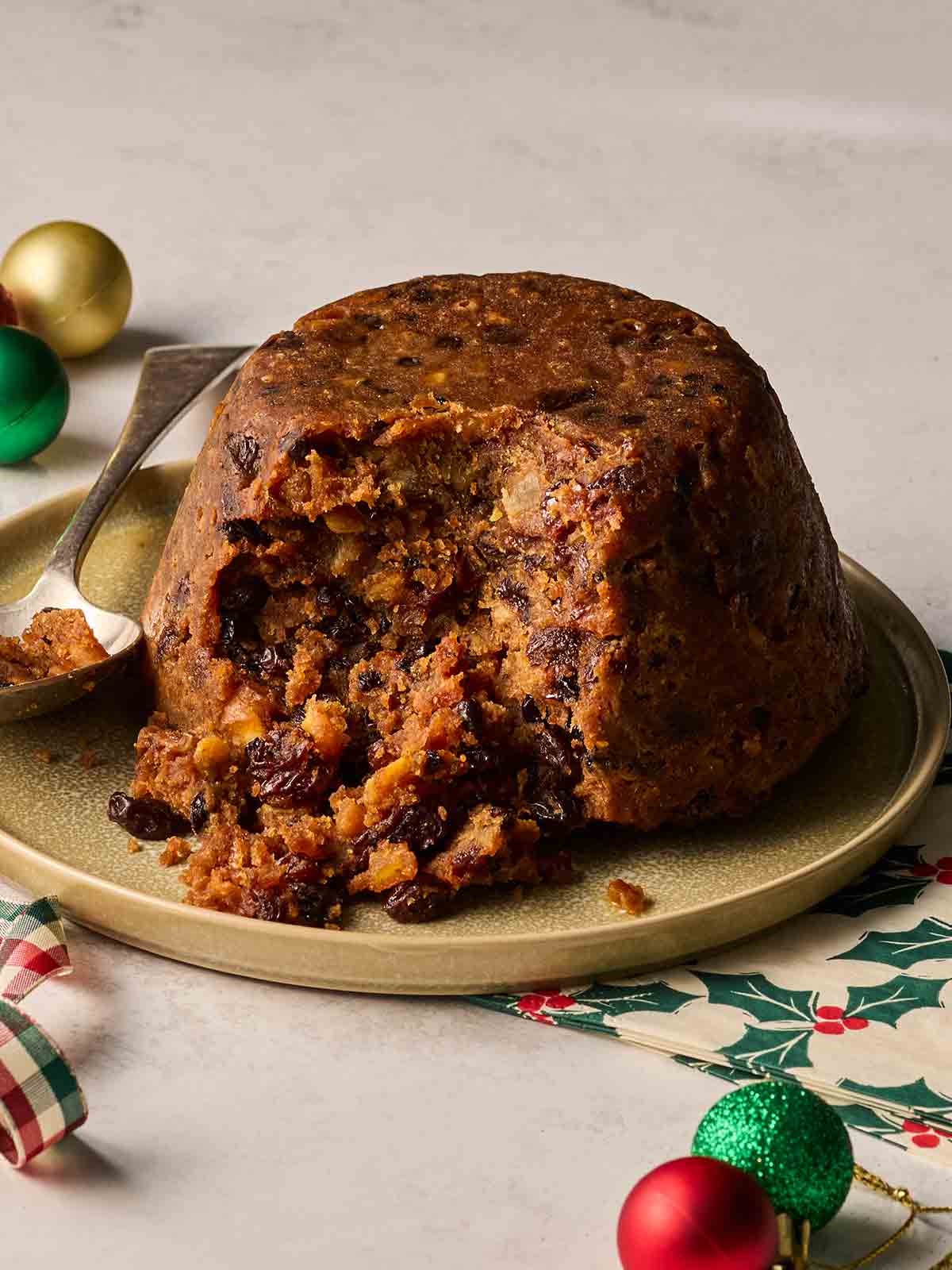
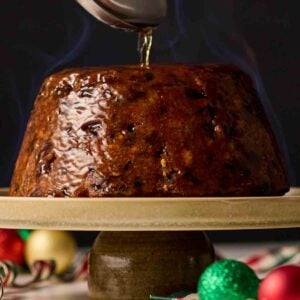
You can’t get a more classic festive dessert than this moist, rich fruitcake with brandy, steamed to perfection ahead of Christmas to allow those aromatic, warming flavours to blend. Follow this easy recipe with step-by-step videos to perfect your homemade Christmas Pudding.
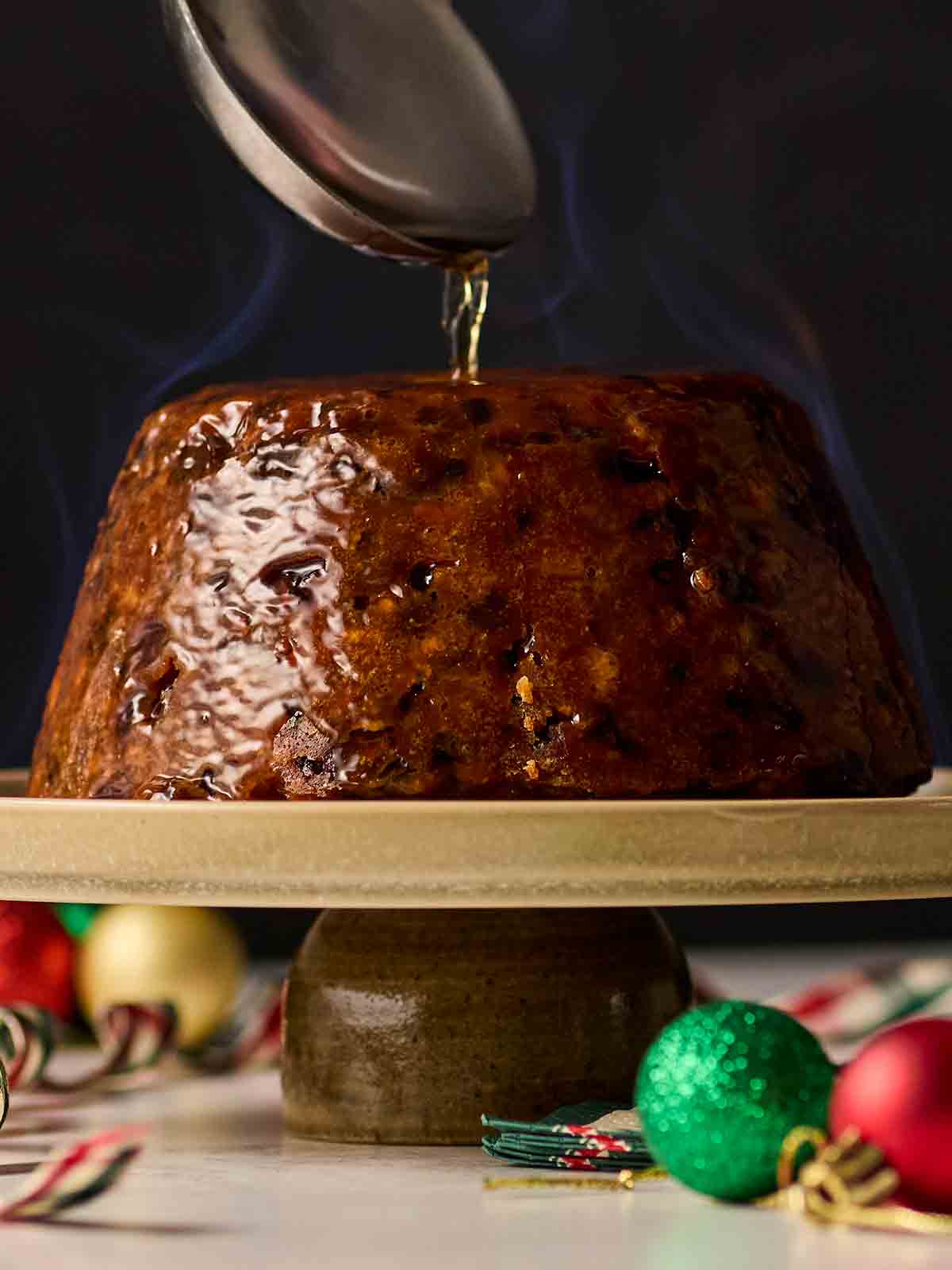
A classic Christmas Pudding is an all-time favourite in my home, and our festive feast just wouldn’t be the same without one.
I love the nostalgia of it and the idea that I’m making an age-old dish that our ancestors have made for centuries.
This is not a million miles from Christmas Cake, although it’s enjoyed as a hot dessert, which is steamed rather than baked. It has the same dense, rich, fruitiness that has an unmistakable taste and smell of warm spices and brandy – in other words, a truly British Christmas.
The best thing about this dish is that not only can we make it ahead of time, but it really should be made in advance to allow it to mature (if you can), which is so convenient over the holiday season!
In fact, it even has its own baking day – named ‘Stir-up Sunday’ – which was traditionally the Sunday before advent, when families came together and everyone in the house gave the pudding a stir in an east to west direction (to represent the journey of the three wise men) while making a wish.
There are a lot of elements to making a homemade Christmas Pudding, but I’ve made sure I’ve covered everything in this post – it’s honestly easy when you know how!
Below you will discover…
- How long you need to soak the fruit for
- How early you can start making it
- What equipment you do or don’t need
- The process of steaming
- How to know when it’s cooked
- How to microwave it instead of steaming it if you prefer
- How to store and reheat it
- What to serve it with
- How to get it flaming at the dinner table!
In addition to these tips and tricks, there are step-by-step videos below, showing you just how to do it.
Why you’ll love this Easy Christmas Pudding Recipe
⭐️ Homemade flavour and texture is so much better than shop-bought
⭐️ Can be made and stored in advance
⭐️ Moist, rich fruitiness – simply the taste of Christmas!
Top Tips
What you’ll need
You will need a 1.2 litre pudding basin, tin foil and parchment paper, some string to make a handle, and a trivet (a small, heatproof stand that sits at the bottom of a saucepan and allows the basin to be slightly raised as it steams to avoid it sitting too close to the heat). Don’t worry if you don’t have one though, a folded tea towel will work instead.
You’ll also need some time! There’s the fruit soaking to take into consideration, and the steaming itself takes about 4 hours.
Soaking
For the fruit to become plump and juicy, it’s best to leave it to soak in a bowl with the orange juice and brandy. The minimum for this is 2 hours, but overnight would be better, if possible.
Making ahead of time
Generally people make their Christmas Puddings ahead of time and it does benefit massively from being made a few weeks ahead as the flavour can really develop. However, it will still be delicious if you need to make it the day of eating, the flavours will just be a little more subtle.
Keep an eye on water levels
There should be enough boiling water in the saucepan to come up about halfway on the pudding basin, which will simmer on a low heat continuously.
This means the water will evaporate over time, so make sure you keep an eye out for the reducing level, and top it up as and when it is needed (I’d recommend checking every 45 minutes or so.)
Knowing when it’s cooked
You can check if it’s cooked by piercing a skewer through the foil and parchment and into the pudding, and if it comes out with no raw mixture on it, it’s ready.
Removing the pudding to serve
Remove the foil and parchment lid, being very careful of any escaping steam as it can give you a nasty scold if you’re not careful (wearing oven gloves can be a good idea.)
If you are struggling to get the pudding out of the basin, it’s likely it wasn’t greased quite enough. Carefully turn it back over and run a knife around the sides to help it fall out when you turn it over again.
Serving
We steam the pudding to cook it initially ahead of time, then we steam it again to reheat it. To do this, steam it using the same method as in the recipe for 1:30-2 hours until piping hot throughout.
Serve it alongside ice cream, brandy butter, custard or cream.
Ingredients
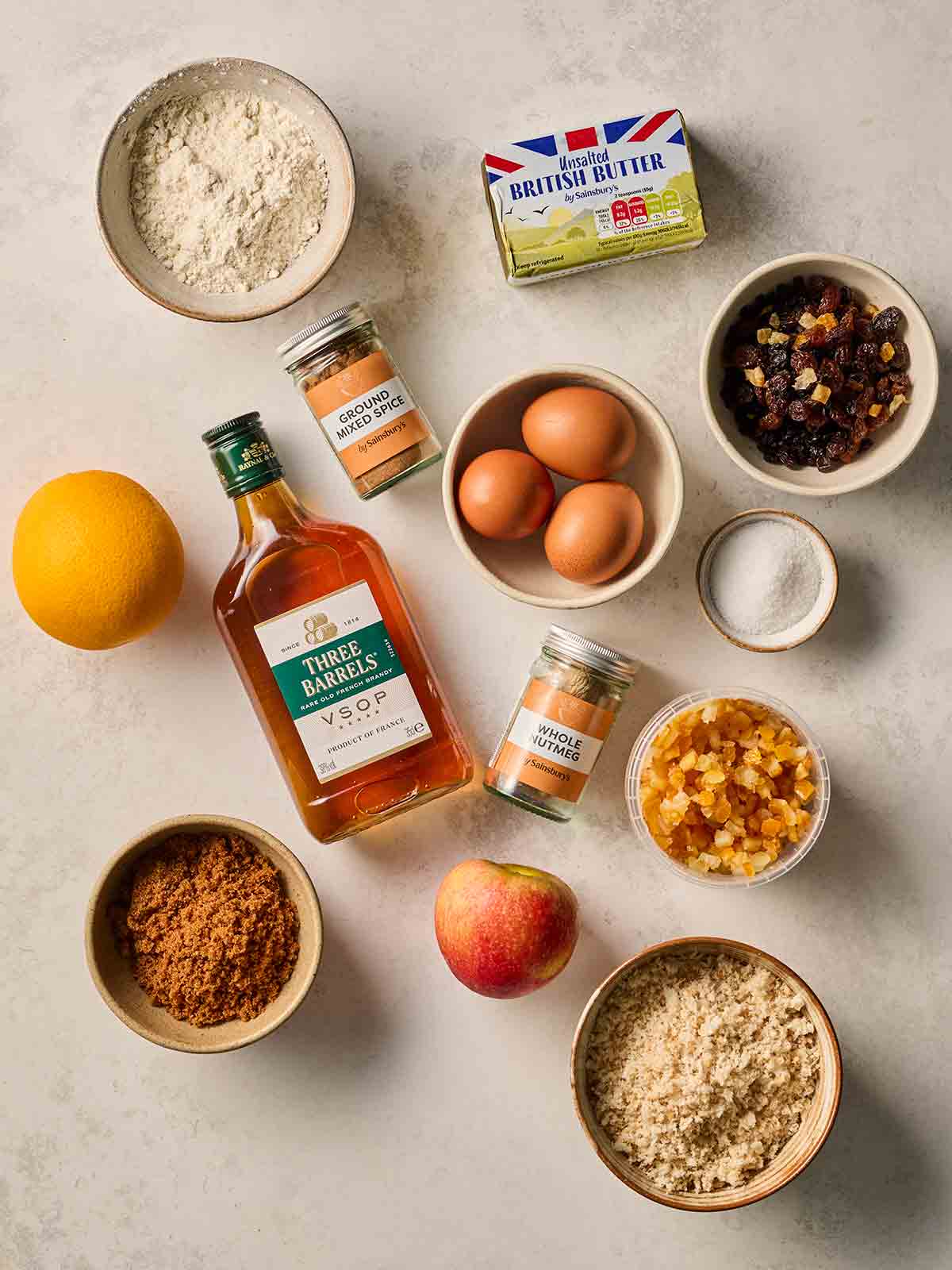
- Dried mixed fruit – In the UK, this is typically a mixture of sultanas, currants, raisins and candied citrus peel.
- Mixed candied peel – A mixed one usually contains preserved lemon and orange rind.
- Apple – One, peeled and grated.
- Orange – The zest and juice of one.
- Brandy – Any kind will work. You will need 75ml for the initial soak, plus an extra 5 tablespoons for lighting the pudding if you want to!
- Dark muscovado sugar – This is perfect as it has a lovely, deep colour and treacly taste, but you could use dark brown soft if you’d rather.
- Fresh breadcrumbs – These give the pudding a nice soft texture. You can sometimes buy fresh breadcrumbs in the supermarket but the easiest way is to simply pulse some slightly stale white bread in a food processor.
- Plain flour – Also known as all purpose flour.
- Mixed spice – In the UK, this is a combination of ground spices, often including cinnamon, coriander, nutmeg, allspice, cloves, ginger and mace.
- Nutmeg – Just ¼ teaspoon.
- Sea salt – Also just ¼ teaspoon.
- Unsalted butter – This needs to be melted. Some for the pudding, some for greasing the pudding basin.
- Eggs – You will need 3. I use medium, free range.
How to make a Christmas Pudding
1. Place all the fruit in a bowl with the orange juice and brandy. Stir and leave, as per the full recipe below.
2. Grease a pudding basin and cut a small circle of baking parchment to fit into the bottom of the basin.
3. Add the sugar, breadcrumbs, flour, mixed spice, nutmeg and salt and stir with the fruit. Stir in the butter and eggs until everything is combined.
4. Spoon the mixture into the pudding basin. Make a lid with parchment and foil, then tie with string to secure. Make a handle, then place into a deep saucepan. Fill up half way with boiling water.
5. When it’s finished steaming, remove carefully and leave to stand. Remove the paper and foil, then turn over onto a plate to remove.
6. To serve with the pudding alight, heat some brandy, light it in a ladle and pour carefully over the top.
Storing and reheating
If you have made it ahead, simply leave it to cool completely in the pudding basin, then wrap it tightly in clingfilm and foil, and keep in a cool, dark place. (You can also keep it in the fridge if your kitchen is particularly warm.)
You can also freeze the pudding but make sure you leave enough time for it to defrost.
To reheat the pudding when it’s time to serve: Use the same method as in the recipe below for 1:30-2 hours until piping hot throughout.
How to microwave instead of steaming
You can also cook a Christmas Pudding in the microwave, which cuts down the steaming time considerably, but please note a microwaved pudding isn’t quite as flavourful. To do it this way…
- Spoon the mix into the microwave-safe pudding basin, making sure it’s no more than three-quarters full, then cover with cling film with a few small holes in it for the steam to escape. (Some basins come with a lid with holes in, if so you can use this instead.)
- Microwave on medium power (600-700W) for 8 minutes, then leave the pudding to stand for 8 minutes.
- Microwave again for 5-6 minutes until a skewer comes out without any raw mixture on it.
- Leave the pudding to stand for 10 minutes before serving.
- Follow the storage instructions above and to reheat, microwave on medium for 4-6 minutes until it’s hot all the way through.
How to flame a Christmas pudding
- Place the 5 tablespoons of brandy into a small saucepan and warm it over a medium heat. (Don’t boil it!)
- Pour the warm brandy into a long-handled ladle and carefully light it with a match.
- Carefully pour the flaming brandy over the pudding.
- The flame will burn out on its own after a short amount of time.
(Never pour alcohol directly from the bottle near the naked flame and have a plan to put out a fire if one were to start.)
Get my Christmas cookbook!
Get more festive recipes in my ‘What’s For Christmas Dinner?’ book.
More Christmas dessert recipes…

Desserts
Christmas Wreath Pavlova

Cheesecakes
Baileys Cheesecake {No Bake}

Christmas Recipes
Yule Log
Desserts
Classic Trifle
FAQs
Sure! If you’d like to leave it out, simply swap the brandy for the same quantity of apple or orange juice, or a combination of the two. Please be aware that the preservation times won’t be the same without alcohol, so I’d make it closer to the time you want to eat it (or freeze it as soon as you’ve made it). You also won’t be able to set it alight!
Serve it alongside ice cream, brandy butter, custard or cream.
It’s very traditional for a silver coin to be hidden inside a Christmas Pud, with the finder said to be the lucky one who would enjoy good luck and prosperity for the year ahead. While I do love this age-old tradition, I tend to leave out the coin in case anyone chokes on it! But do add one in for fun if you want to – just warn your diners first (and make sure it’s clean!)
Suet is animal fat and was traditionally used in British cooking for dishes like steamed pudding, dumplings and Christmas Pudding. You definitely don’t need to use this though! Instead, we’re making sure we get the same consistency and density from other ingredients, including breadcrumbs and butter, which help our pudding bind together.
They are almost the same thing, although figgy pudding is the Christmas Pudding’s older sibling. It was the most common way of making fruit pudding during the festive season, but using figs as the main ingredients, and sometimes containing other dried fruit.
They are often called the same thing, particularly in the US, but they’re not technically exactly the same.
Yes! I don’t make mine with a steamer. I simply use a large, deep saucepan that’s big enough to fit the pudding basin inside (in fact, this is the traditional way to make a traditional Christmas Pudding.)
Just make sure there is always water around the sides to ensure the pudding is getting the heat it needs.
In theory, you can make it up to a whole year before, so long as you store it well-wrapped and in a cool, dark place. Making it ahead of time really does enhance the flavour, as it allows the fruits to absorb more liquid and the spices and alcohol to become more intense.
Traditionally a Christmas Pudding was made on ‘Stir-up Sunday’, the Sunday before Advent, in the UK, which would be at the the end of November.
I try to make mine about 4-6 weeks ahead of time, but even if you don’t have a chance to make it in advance, it will still be delicious after just a day or two.
Let me know how you got on and what you thought of these recipes. Please rate the recipe using the ⭐️ below.
Also I’d LOVE to see your cooking creations. If you’d like to share yours with me, you can tag me on Instagram (@tamingtwins).
Traditional Christmas Pudding Recipe
Ingredients
- 350 g (2 1/3 cups) Dried mixed fruit
- 75 g (3/4 cup) Mixed candied peel
- 1 Apple, Peeled and grated
- 1 Orange, Zest and juice
- 75 ml (1/3 cup) Brandy
- 125 g (1/2 cup) Dark muscovado sugar
- 100 g (1 1/4 cups) Fresh breadcrumbs
- 80 g (2/3 cup) Plain flour, All purpose flour
- 1 1/2 tsp Mixed spice
- 1/4 tsp Grated nutmeg
- 1/4 tsp Fine sea salt
- 125 g (4 oz) Unsalted butter, Melted
- 3 Eggs, Beaten
To grease the pudding basin:
- 25 g (1 oz) Unsalted butter
To flame:
- 5 tbsp Brandy
Instructions
- Make the fruit mix: Place the dried fruit, candied peel, grated apple, orange zest and juice and the brandy in a large mixing bowl and stir together. Cover and leave to soak for at least 2 hours or, even better, overnight.
- Prepare the basin: Use the 25g butter to grease a 1.2 litre pudding basin and cut a small circle of baking parchment to fit into the bottom of the basin.
- Make the batter: When the fruit has soaked add the sugar, breadcrumbs, plain flour, mixed spice, nutmeg and salt and stir to combine.
- Stir in the melted butter and beaten eggs until everything is well combined.
- Prepare for steaming: Spoon the mixture into the pudding basin and flatten out the top with the back of your spoon.
- Place a piece of baking parchment over a piece of foil the same size. Fold a crease in the middle of both so they have a pleat holding them both together.
- Place the sheet with the baking parchment side down and the pleat across the top of the pudding basin and press the sides around the bowl.
- Use some string to tightly tie the parchment and foil to the bowl, trim the excess foil and parchment and tuck the rest around the sides of the bowl, scrunching it up to make it water tight.
- Use a doubled-over piece of string to carefully thread through the string you tied round the bowl to make a handle.
- Place a trivet (or even a smaller pan or a thickly folded up tea towel) on the bottom of a large deep saucepan and place the pudding basin on top.
- Pour in enough boiling water to come up to halfway up the sides of the pudding basin and bring to a very gentle simmer.
- Steam to cook: Place a lid on the pan and steam for 4 hours. During this time you will need to keep an eye on the water level, so check it every 45 minutes or so and top up to make sure it’s always halfway up the basin. Keep the water at a very gentle simmer over a low heat.
- Removing the pudding: Carefully remove the pudding from the pan using the string handle you made to help you, and leave the pudding to stand for 10 minutes.
- Check it’s cooked through: Do this by piercing a skewer through the foil and parchment and into the pudding, making sure it comes out with no raw mixture on it.
- Remove the lid carefully: Remove the foil and parchment lid, being very careful of any escaping steam as it can give you a nasty scold if you’re not careful (wearing oven gloves can be a good idea.)
- Turn it out: Place a serving plate on top of the basin and turn it over with the plate. Carefully lift away the basin.
Did you make this recipe? Click here to let us know how it went and give it a ⭐️ rating! Your feedback helps us to make more recipes you really want.
Notes
- Place the 5 tablespoons of brandy into a small saucepan and warm it over a medium heat. (Don’t boil it!)
- Pour the warm brandy into a long-handled ladle and carefully light it with a match.
- Carefully pour the flaming brandy over the pudding.
- The flame will burn out on its own after a short amount of time.
- (Never pour alcohol directly from the bottle near the naked flame and have a plan to put out a fire if one were to start.)
- Spoon the mix into the microwave-safe pudding basin, making sure it’s no more than three-quarters full, then cover with cling film with a few small holes in it for the steam to escape. (Some basins come with a lid with holes in, if so you can use this instead.)
- Microwave on medium power (600-700W) for 8 minutes, then leave the pudding to stand for 8 minutes.
- Microwave again for 5-6 minutes until a skewer comes out without any raw mixture on it.
- Leave the pudding to stand for 10 minutes before serving.
- Follow the storage instructions above and to reheat, microwave on medium for 4-6 minutes until it’s hot all the way through.
Nutrition
Nutrition information is automatically calculated, so should only be used as an approximation. Nutritional values are per portion unless otherwise stated.